

Does Your Homeowners Insurance Cover Roof Storm Damage?
The short answer: yes, most standard homeowners insurance policies cover sudden storm damage to your roof. Wind, hail, fallen trees, and lightning are all covered perils under the dwelling coverage section of a standard HO-3 policy — the most common policy type in Maryland, Virginia, and Washington DC.
But that short answer hides some important exceptions that can shrink or kill your coverage: roof age rules that depreciate payouts on older roofs, cosmetic damage exclusions that deny claims for hail damage that does not affect function, and separate wind/hail deductibles that mean thousands more out of pocket than most people expect. DC, Maryland, and Virginia each have state-specific insurance regulations that affect how claims are processed and what rights you have when a claim is disputed.
Knowing your coverage before a storm hits, not after, is the difference between recovering $15,000 for a roof replacement and finding out your policy only pays a fraction of that.
Before getting into coverage details, figure out whether you actually have claimable damage. Not all post-storm roof issues qualify, and filing a claim for minor damage that falls below the deductible flags your CLUE report without any payout — a mark that stays visible to all insurers for seven years. A quick self-assessment tells you whether the damage is worth filing for. Take the 2-Minute Storm Damage Assessment to get a damage severity score before you call your insurer.
What Types of Storm Damage Are Covered?

Standard policies draw a line between what is covered and what is not based on the cause and nature of the damage.
Covered: wind damage. Missing shingles, lifted flashing, wind-driven rain that enters through a storm-created opening, and structural damage from wind uplift are all covered under dwelling coverage. This includes derechos and severe thunderstorm wind events, which are common in the DMV from spring through fall.
Covered: hail damage. Hail damage to roofing materials — including granule loss, cracked shingles, and dented metal components — is covered under most standard policies. Hail damage roof risks are among the most frequently claimed storm damage types in the DMV region, particularly in counties that sit in the regional hail corridor.
Covered: fallen tree damage. If a tree or large branch falls on your roof during a storm, the damage to the roof structure is covered. Most policies also cover the cost of removing the tree from the structure (typically up to $500 to $1,000 per tree).
Covered: lightning strikes. Lightning damage to the roof, electrical system, and any resulting fire damage is covered under standard policies.
Usually covered: secondary water damage. If storms breach your roof and water damages ceilings, walls, insulation, or flooring, this secondary damage is typically covered as part of the same claim — provided the water entered through a storm-created opening, not through an existing maintenance deficiency.
Not covered: gradual wear and maintenance failures. Leaks from worn-out shingles, clogged gutters, or deteriorated flashing are maintenance issues, not storm damage. Insurance does not cover the normal aging process of a roof.
Not covered: pre-existing damage. If an adjuster determines that the damage existed before the claimed storm event, the claim will be denied. This is why documenting your roof’s condition before storm season — and documenting damage immediately after a storm — is critical.
Gray area: cosmetic hail damage. This is where most fights happen. Some policies now include a cosmetic damage exclusion that denies coverage for hail damage that is only cosmetic — surface granule loss and denting that does not impair the roof’s ability to shed water. If your policy has this exclusion, your claim must demonstrate functional damage (cracked mat, exposed underlayment, water penetration risk) to be approved. Check your policy for this exclusion before filing.
Understanding Your Roof Coverage in Maryland, Virginia, and DC
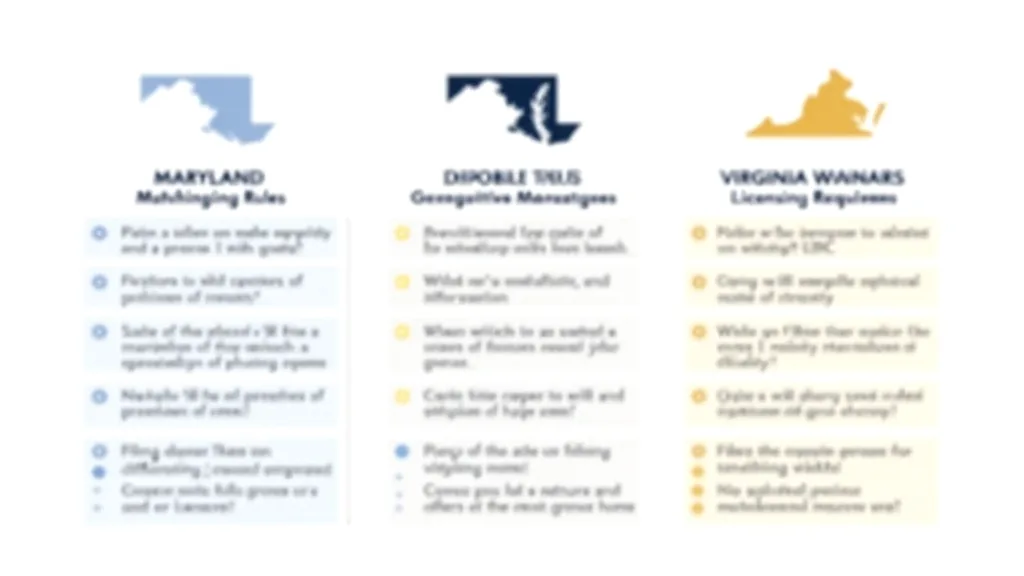
Insurance rules are not the same across the DMV. Each jurisdiction has its own regulations that affect how your claim is handled, what you can dispute, and what extra protections you get.
Maryland is regulated by the Maryland Insurance Administration (MIA). Maryland has a distinctive insurance matching rule that requires insurers to match roofing materials on undamaged sections of the roof when the damaged sections are replaced. In practice, this means that if hail damages one slope of your roof and the replacement shingles cannot reasonably match the existing shingles on the undamaged slopes, the insurer may be required to cover replacement of the entire roof for aesthetic consistency. This rule can significantly increase claim payouts and is one of the strongest consumer protections for roof claims in the region. Wind/hail deductibles are common in Maryland policies, typically ranging from 1 to 2 percent of the dwelling coverage amount.
Virginia is regulated by the Bureau of Insurance. Virginia does not have a mandatory matching requirement, which means insurers can replace only the damaged sections even if the new materials visually differ from the existing roof. This creates a different claim dynamic than Maryland — Virginia homeowners often need to negotiate harder for full replacement on partially damaged roofs. The Virginia Bureau of Insurance provides a consumer complaint process for disputed claims. Wind/hail deductibles are standard in Virginia policies.
Washington DC is regulated by the Department of Insurance, Securities and Banking (DISB). DC has tenant-friendly and consumer-oriented insurance regulations, with specific dispute resolution channels for denied claims. DC homeowners can file complaints with DISB for claims they believe were unfairly handled. The District’s unique housing stock — rowhouses with flat membrane roofs, historic homes with slate — creates claim situations that do not arise in the surrounding suburbs. Wind/hail deductibles in DC policies are similar to Maryland and Virginia.
Anti-assignment laws vary by state and affect whether you can assign your insurance claim benefits directly to a roofing contractor. In some jurisdictions, contractors can file claims and collect payments on your behalf through an Assignment of Benefits (AOB). In others, the homeowner must retain control of the claim process. Understand your jurisdiction’s rules before signing any contractor agreement that references insurance benefits.
Roof Age and Insurance: Will They Cover an Old Roof?
Roof age is one of the biggest worries homeowners have when thinking about filing a claim. The answer depends on your policy type.
Replacement Cost Value (RCV) policies pay what it currently costs to replace your roof with equivalent materials, regardless of the roof’s age. If your 20-year-old three-tab shingle roof is destroyed by hail, an RCV policy pays for new three-tab shingles at 2026 prices, minus your deductible. RCV is the better policy type for homeowners with older roofs.
Actual Cash Value (ACV) policies depreciate the payout based on the roof’s age and remaining useful life. A 15-year-old asphalt shingle roof with a 25-year expected lifespan might receive only 40 to 60 percent of the replacement cost under ACV. On a $15,000 replacement, that depreciation can mean $6,000 to $9,000 less in your claim payout.
Some insurers will not write new policies for roofs over 20 years old. If your roof is approaching this threshold, you may face difficulty renewing your policy or be automatically downgraded from RCV to ACV coverage for the roof.
Inspection requirements are becoming standard. Many insurers now require a professional roof inspection before writing or renewing a homeowners policy. If the inspection reveals that the roof is at or past its expected life, the insurer may decline coverage or impose conditions.
If your roof is over 15 years old, check your coverage type before storm season. Discovering that you have ACV coverage after a hailstorm limits your options at the worst possible time.
Will Filing a Roof Claim Raise Your Premiums?
This worry stops a lot of homeowners from filing legitimate claims, and it ends up costing them thousands in repairs they pay out of pocket.
A single weather-related claim typically does not trigger a premium increase in Maryland, Virginia, or DC. Insurers in the DMV generally treat individual storm damage claims as expected costs of insuring properties in a weather-prone region.
Multiple claims within three to five years may trigger a non-renewal or premium increase. If you file two or more claims in a three-year period, your insurer may raise your rates at renewal or decline to renew your policy. This is tracked through the CLUE (Comprehensive Loss Underwriting Exchange) report.
Catastrophe claims — damage from widespread, declared storm events — generally carry no individual penalty. When a storm affects thousands of homes in the same area, insurers treat the claims as catastrophe losses rather than individual risk factors.
CLUE report visibility. Every insurance claim you file is recorded in the CLUE database and visible to all insurers for seven years. Even inquiries (calling to ask about a claim without filing one) can appear on some reports. This is why you should not file for damage that is below or near your deductible amount — the CLUE entry provides no benefit and may affect future policy pricing.
When not to file. If your estimated damage is less than 150 percent of your deductible, filing may not produce a meaningful payout after the deductible is subtracted. In that case, paying out of pocket and avoiding the CLUE entry is often the smarter financial decision.
How to Maximize Your Storm Damage Claim

Document everything right away. Photograph and video all damage: exterior roof surfaces, interior ceilings and walls, collateral damage to gutters, siding, and outdoor equipment. Time-stamped photos tie the storm event to the damage.
File promptly. Most policies require timely notice of a loss. Filing within the first 30 days of discovering damage strengthens your claim and prevents disputes about whether subsequent events contributed.
Get an independent contractor estimate before the adjuster visits. A licensed contractor’s line-item estimate gives you a benchmark to compare against the adjuster’s Xactimate numbers. Remember, the adjuster works for the insurance company, not for you.
Request a re-inspection if the adjuster’s estimate seems low. You have the right to challenge the initial estimate. Bring your contractor’s report and point out specific line items that differ.
Know your right to file a supplement. After initial repairs reveal additional damage — rotted decking beneath intact shingles, for example — you can file a supplemental claim for the additional scope. Supplements are normal and expected in the roofing insurance claims process.
Consider a public adjuster for claims over $15,000. Public adjusters work exclusively for the homeowner, not the insurance company. They charge 10 to 15 percent of the total claim payout but often increase the settlement by more than their fee.
Once you confirm your policy covers storm damage, the next part is getting through the actual claim process: documenting damage correctly, preparing for the adjuster’s Xactimate estimate, and filing supplements when the initial payout comes in low. Each step has mistakes that can cost you thousands. Roof Insurance Claim Process Step by Step walks through the complete process with DMV-specific guidance.
Storm Damage Insurance FAQs
What not to say to a roof insurance adjuster? Do not say the roof was already in poor condition, do not speculate about the damage being pre-existing, do not suggest the damage might be from an earlier storm unless you are certain, and do not agree to a settlement amount on the spot. Answer honestly but do not volunteer information that weakens your claim.
Will insurance replace a roof for hail damage? If hail damage affects 25 percent or more of your roof, most adjusters approve full replacement rather than partial repair. Even below that threshold, if the damage is functional (not just cosmetic) and affects enough of the roof surface that patching is impractical, full replacement may be approved. The key is documenting the damage density per roofing square.
Is it worth making an insurance claim for hail damage? If the estimated repair cost exceeds 150 percent of your deductible, filing is almost always worthwhile. A single storm claim typically does not raise premiums in the DMV. However, if the damage is minor and close to your deductible amount, the claim may not produce meaningful payout and will remain on your CLUE report for seven years.
When discussing wind/hail deductibles — typically 1 to 2 percent of dwelling value — many DMV homeowners are surprised to learn they have a separate, higher deductible for storms than for other claims. On a $500,000 home, a 2 percent wind/hail deductible means $10,000 out of pocket, which fundamentally changes the math on whether to file for moderate damage. Roof Insurance Deductible Guide explains how deductibles work, how to calculate your actual out-of-pocket exposure, and when filing a claim still makes financial sense.