

How Bad Is Your Hail Damage? Find Out in 2 Minutes
A hailstorm just blew through the DMV, and now you are staring at your roof wondering whether those dark marks on your shingles are a real problem or just cosmetic blemishes. You are not alone — hail damage is the single most common reason for roof replacement claims in DC, Maryland, and Virginia, and most of it goes undetected until the next heavy rain exposes what the ice already broke.
This free hail damage roof assessment takes about two minutes. No login, no email required. You will answer questions about what you can see on your roof, and the tool will score your damage severity — minor, moderate, or severe — along with specific next steps for each level.
Interactive tool loads here
inline-tool-embed
What the Assessment Checks

The tool runs through the same five damage indicators a licensed roof inspector checks during a hail damage evaluation.
Shingle granule loss. Hail strikes displace the ceramic granules that protect asphalt shingles from UV radiation and water penetration. You will notice dark spots on individual shingles where granules have been knocked away, and you may find granule accumulation in your gutters or at the bottom of your downspouts. Granule loss is the most common form of hail damage on roofs in the DMV, and it is often the first indicator adjusters check during a claim inspection.
Dents on metal components. Hail impacts leave distinctive dents on soft metals — roof vents, pipe boots, flashing, and gutters. These dents are easier to spot than shingle damage and serve as reliable collateral evidence that hail struck your roof with enough force to cause broader damage.
Cracked, split, or missing shingles. Larger hailstones (quarter-size and above) can crack shingles outright, especially on older roofs where the asphalt has become brittle. Missing shingles after a hailstorm usually indicate severe wind and hail working together to compromise the roof surface.
Soft spots and bruising. When you press on an asphalt shingle and it gives like a bruised apple, the fiberglass mat beneath the surface has fractured. This is functional damage — the shingle can no longer repel water effectively, even if it looks intact from a distance.
Impact pattern and density. Insurance adjusters assess hail damage based on the number and distribution of impacts per roofing square (a 10-by-10-foot section). A random scatter pattern across the roof confirms hail rather than mechanical or age-related damage.
Understanding Your Results
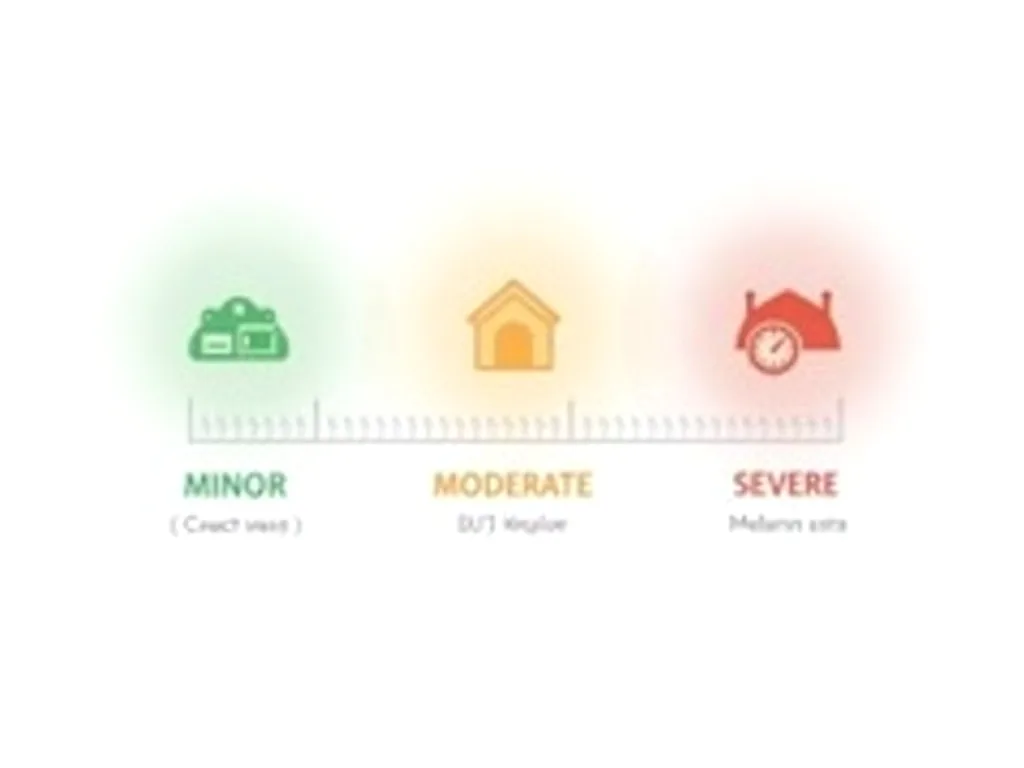
Your assessment produces one of three severity levels based on your answers.
Minor damage means you reported limited visible indicators — perhaps some granule displacement but no cracking, no dents on metal components, and no soft spots. Minor hail damage is often cosmetic, meaning the shingles still function but their lifespan has been shortened. Do not ignore this: even cosmetic granule loss shortens your roof’s life by five to ten years. Exposed asphalt breaks down faster under sun and temperature swings. Monitor the affected areas after each subsequent storm and consider scheduling an inspection before the next hail season.
Moderate damage indicates a combination of indicators — granule loss plus dented vents, or cracked shingles in multiple areas. At this level, your roof’s ability to shed water may already be compromised. Moderate damage typically warrants a repair or partial replacement within 30 days, and it is often enough to justify an insurance claim that covers most of the cost minus your deductible.
Severe damage means widespread indicators across multiple damage categories — significant granule loss, cracked or missing shingles, dented metal components, and possibly soft spots. Severe hail damage creates immediate structural risk. Water can penetrate the underlayment and reach the roof decking, leading to rot, mold, and interior damage that compounds rapidly. If your assessment returns a severe result, file your insurance claim within 48 hours and get a professional on your roof as soon as possible.
Hail size matters more than most people think. Quarter-size hail (one inch in diameter) can damage aging asphalt shingles. Golf-ball-size hail (1.75 inches) damages most residential roofing materials regardless of age. Once hailstones reach baseball size (2.75 inches), every roof type sustains significant damage.
The DMV region experiences hail events primarily from March through August, and some counties see significantly more hail than others. Certain areas like Prince George’s County and Charles County sit in a defined hail corridor where hail frequency runs two to three times higher than surrounding areas. If your property sits in the corridor, this probably was not a one-off event, and impact-resistant roofing starts to make financial sense. See the DMV Hail Corridor Map to check your county’s hail frequency and historical storm data.
Once you know the severity, the money question comes next. Repair costs in the DMV range from a few hundred dollars for localized shingle replacement to $25,000 or more for a full roof replacement with upgraded materials. The spread depends on roof size, material choice, and whether your insurance covers the damage. If your assessment shows moderate or severe damage, knowing the ballpark cost before you call your insurance company puts you in a stronger position. Estimate Your Hail Damage Repair Cost with our calculator, which uses 2026 DMV pricing for labor, materials, and permits.
What to Do Next Based on Your Score
Document everything before the next rain. Walk the perimeter of your home and photograph damage to shingles, gutters, downspouts, window screens, and any outdoor equipment. Include wide shots showing the roof surface and close-ups of individual damage points. Time-stamped photos are critical evidence if you file an insurance claim.
Contact your insurance company within 48 hours for moderate or severe results. Most homeowners policies in Maryland, Virginia, and DC have filing windows for storm damage claims — wait too long and you risk forfeiting coverage. When you call, request your claim number and ask when an adjuster will be assigned.
Do not sign any contracts with storm chasers who show up uninvited. After hailstorms, unlicensed out-of-state crews canvass DMV neighborhoods door to door, offering low-cost inspections or pushing immediate contracts. Many disappear after collecting insurance payments, leaving homeowners with substandard work and voided manufacturer warranties. Always verify licensing — MHIC in Maryland, DPOR in Virginia, DCRA in DC.
Get a professional inspection to confirm your self-assessment findings. A self-assessment catches the obvious signs, but a licensed roof inspector walking your roof will find things you cannot see from the ground: underlayment problems, decking soft spots, flashing failures. A professional inspection also gives you the documentation that strengthens an insurance claim and an independent estimate to compare against the adjuster’s numbers. Get a Free Inspection with a licensed DMV inspector — no obligation, same-week availability.
Cosmetic granule loss today turns into a leaking roof next winter, when freezing water seeps into the fractured mat and expands. Knowing how hail damage progresses over time helps you decide whether to repair, replace, or upgrade. For a deeper look at how hail affects different roofing materials over time — and how to tell functional damage from cosmetic — read our Hail Damage to Roof: Complete Guide.
Frequently Asked Questions About Hail Damage
Is it worth fixing hail damage on a roof? Yes. Unrepaired hail damage shortens your roof’s lifespan and can lead to leaks, mold, and interior water damage that costs far more than the original repair. If the damage is insurance-eligible, your out-of-pocket cost may be limited to your deductible — often $1,000 to $3,000 in the DMV.
How much does it typically cost to repair hail damage on a roof? Minor spot repairs run $300 to $1,000. Partial replacement of one roof slope costs $2,000 to $6,000. Full replacement in the DMV area ranges from $8,500 to $25,000 or more depending on roof size and material. Most storm damage replacements are partially or fully covered by homeowners insurance.
What is the best way to repair hail damage on a roof? The repair method depends on severity. Minor granule loss may only need monitoring. Cracked or missing shingles require targeted replacement. Widespread damage across multiple slopes typically means full roof replacement — which, if insurance-covered, is also an opportunity to upgrade to impact-resistant Class 4 shingles that reduce future risk.
Is it worth claiming hail damage? If the repair cost exceeds your deductible, filing a claim is almost always worthwhile. A single weather-related claim typically does not raise your premiums in Maryland, Virginia, or DC. The exception: if the damage is minor and the repair cost is close to your deductible, the claim may not produce a meaningful payout and will appear on your CLUE report for seven years.
Not sure about your results?
Get a free professional inspection from a licensed DMV contractor. Same-week availability.
Schedule Your Free Inspection
Licensed contractors. No obligation. Same-week availability.
No spam. Your information is shared only with a licensed DMV roofing contractor.