

What Is Hail Damage to a Roof?
Hail damage occurs when ice stones fall from thunderstorm clouds and strike roofing materials at velocities that can exceed 100 mph. The impact displaces protective granules from asphalt shingles, fractures the fiberglass mat beneath the surface, dents metal components, and cracks rigid materials like slate and tile. The result ranges from cosmetic surface blemishes to functional failures that allow water to penetrate the roof system and reach the structure below.
The distinction between cosmetic and functional hail damage matters a lot, especially when you file an insurance claim. Cosmetic damage means the roof’s appearance has changed but its ability to shed water is intact. Functional damage means the shingle, tile, or membrane can no longer perform its waterproofing function. Some insurance policies now exclude cosmetic-only damage, so understanding which category your damage falls into determines whether your claim gets approved or denied.
The DMV area experiences hail events primarily from March through August, with the peak months being May and June. While the region does not sit in the severe hail belt of the central United States, the DMV’s combination of warm Gulf moisture and cold frontal boundaries produces enough hail to cause millions of dollars in storm damage to roofs annually. Even small hail — one inch in diameter, roughly the size of a quarter — can cause significant damage to aging roofs where the shingles have already lost flexibility and adhesion.
How to Identify Hail Damage on Your Roof
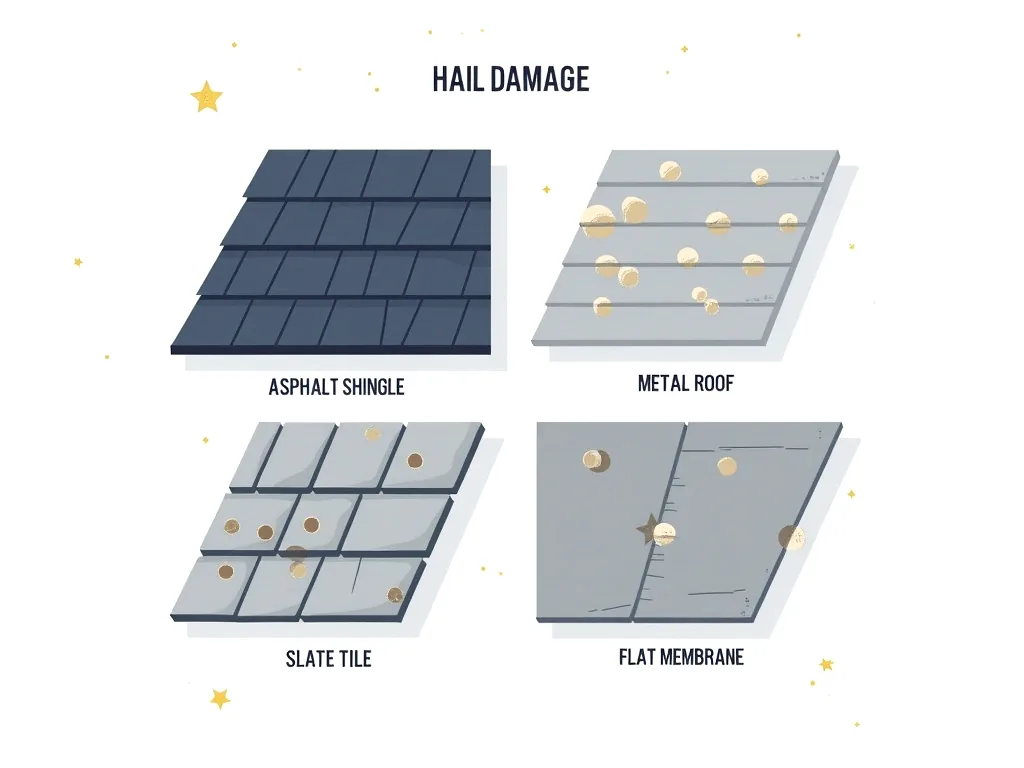
You need to know what hail damage actually looks like before you can protect your home or file a solid insurance claim. Each roofing material shows damage differently, and some of it is subtle enough to miss if you do not know where to look.
Asphalt shingles are the most common roofing material in the DMV, and they show hail damage in a distinctive pattern. Look for random dark spots on the shingle surface where ceramic granules have been knocked away, exposing the black asphalt beneath. These spots feel soft or spongy when you press on them, meaning the fiberglass mat underneath has cracked. Think of it like a bruise that never heals. The random pattern is key: hail creates an irregular scatter of impacts across the roof, unlike blistering (which follows manufacturing lines) or wear (which concentrates on south-facing slopes). Granule accumulation in gutters and at the base of downspouts is another reliable indicator — after a hailstorm, check your gutters for a layer of gritty, sand-like material that was not there before.
Metal roofs show hail damage as dents on panels, ridges, and standing seams. Metal roofing rarely sustains functional damage from hail — it dents but continues to shed water. The exception is at seam points, where a hard enough impact can break the seal between panels and create a water entry path. Standing seam metal is more resistant than ribbed or corrugated panels because the raised seams absorb impact before the flat panel surface does.
Collateral evidence is often easier to spot than shingle damage. Dents on aluminum gutters, downspouts, window screens, outdoor AC condenser fins, and car hoods all tell you hail hit your property hard enough to damage soft metals. Your adjuster is going to look for exactly this kind of collateral damage. If your gutters are dented, your shingles took hits too.
Granule accumulation in gutters after a storm is one of the clearest hail indicators. Some granule shedding is normal over a roof’s life, but a sudden heavy deposit after a hailstorm indicates impact damage rather than gradual wear.
Roof vents and pipe flashing are the best early indicators. These thin metal components dent visibly under hail impact and are easier to inspect than shingles. If your pipe boots and ridge vents show dents, the surrounding shingles sustained similar impacts.
What hail damage does not look like. Blistering (raised bubbles on the shingle surface) is a manufacturing or ventilation defect, not hail. Cracking that follows the shingle’s tab lines is thermal cycling. Wear concentrated on the south-facing slope is UV degradation. Normal granule loss from aging is gradual and even, not the random spot pattern hail creates. Misidentifying these as hail damage gets claims denied.
Hail Damage by Roof Material Type
The DMV has a mix of roofing materials, and each one takes hail differently.
Asphalt shingles are the most common material on DMV homes. Standard three-tab shingles are the most vulnerable to hail — their single-layer construction means any impact that fractures the mat compromises the shingle’s waterproofing function. Architectural (dimensional) shingles are thicker and more resilient, but not immune. Their layered construction absorbs more impact energy before the mat fractures, giving them better performance against quarter-size hail. However, golf-ball-size hail damages both types.
Slate roofs are common in older DC neighborhoods — Georgetown, Capitol Hill, Dupont Circle — and in historic Maryland and Virginia towns. Hail cracks and chips slate, creating irregular fractures that may not be visible from ground level. Damaged slate tiles must be individually replaced, which requires a specialist roofer with access to matching slate stock. Repair costs for slate are significantly higher than asphalt.
Flat roofing materials (TPO and EPDM membranes) are standard on DC rowhouses and many commercial buildings. Hail can puncture single-ply membranes, especially at seams and near penetrations. EPDM (rubber) absorbs impact better than TPO, but both are vulnerable to large hailstones. Flat roof hail damage is often invisible from the exterior — the puncture may be small enough that water intrusion develops gradually.
Impact-resistant Class 4 shingles are tested to the UL 2218 standard, which drops a two-inch steel ball from 20 feet onto the shingle surface. Class 4 shingles must show no cracking or fracturing after two impacts at the same point. They perform significantly better under hail than standard asphalt shingles and are increasingly recommended for DMV homeowners in hail-prone areas.
What Size Hail Damages a Roof?

Hail size is the biggest factor in damage severity, but your roof’s age and condition matter almost as much as the size of the ice.
Pea size (1/4 inch): Rarely causes functional damage to any roof type in good condition. May displace a small amount of granules on very old shingles but generally does not warrant a claim.
Quarter size (1 inch): The threshold where damage becomes likely on aging asphalt shingle roofs — particularly roofs over 15 years old where the shingle mat has lost flexibility. Newer architectural shingles typically handle one-inch hail without functional damage, but granule displacement is common.
Golf ball size (1.75 inches): Damages most residential roofing materials regardless of age or condition. At this size, hail fractures fiberglass mats, cracks slate, dents metal panels at seam points, and can puncture single-ply membranes. Golf-ball hail events produce the majority of insurance-eligible roof damage claims in the DMV.
Baseball size (2.75 inches): Severe damage to all roof types. At this diameter and the associated impact velocity, even Class 4 shingles sustain some damage. Full roof replacement is common after baseball-size hail events.
The National Weather Service classifies hail by size and severity, and their storm reports for your county and date become critical documentation for insurance claims. A 15-year-old asphalt shingle roof that took quarter-size hail may have sustained more damage than a 5-year-old roof hit by golf-ball hail — age and condition amplify the impact.
Hail Damage and Your Insurance Claim
Most homeowners insurance covers hail damage under dwelling coverage, and it is one of the most frequently filed storm damage claim types in the DMV.
Wind/hail deductibles are common in all three DMV jurisdictions. Many policies carry a separate deductible for wind and hail events, typically 1 to 2 percent of the dwelling coverage amount. On a home insured for $400,000, a 2 percent wind/hail deductible means $8,000 out of pocket before the insurance payout begins. Standard flat deductibles ($1,000 to $2,500) apply to some policies — check your declarations page.
Filing timeline. File your hail damage claim within one year of the storm event to stay safely within most policy windows. However, filing within the first 30 to 60 days produces stronger claims because the damage has not been complicated by subsequent weather events, and the connection between the storm and the damage is clear.
What the adjuster looks for. Your adjuster is going to check five things: random impact pattern on shingles (not aligned with manufacturing lines), collateral damage on soft metals (gutters, vents, AC units), a confirmed hail event in the NWS storm report for that date and location, and damage consistent with the reported hail size. They count impacts per roofing square and typically need eight or more hits per square to approve replacement of that section.
Cosmetic damage exclusions. An increasing number of policies exclude cosmetic-only hail damage — surface granule displacement and denting that does not affect the roof’s waterproofing function. If your policy has this exclusion, your claim must demonstrate functional damage: cracked mats, exposed underlayment, or bruised shingles that compress under pressure. A licensed inspector who documents functional indicators strengthens claims on policies with cosmetic exclusions.
Average insurance payout for hail damage roof replacement in the DMV runs $12,000 to $20,000 for a standard single-family home. The actual amount depends on roof size, material, your deductible, and whether your policy pays RCV or ACV.
Getting a second opinion. If the adjuster’s estimate seems low, you have the right to request a re-inspection. You can also hire your own contractor to prepare an independent estimate and submit a supplement request for any items the adjuster missed or underpriced.
Knowing you have coverage is only half the battle. The claim process has documentation deadlines, an adjuster visit where word choice matters, and the option to file supplements if the initial estimate comes in low. A lot of homeowners leave money on the table because they skip the negotiation steps. Roof Insurance Claim Process Step by Step walks through each stage from documentation to final payout, with specific guidance for Maryland, Virginia, and DC.
Hail Damage Repair Options and Costs
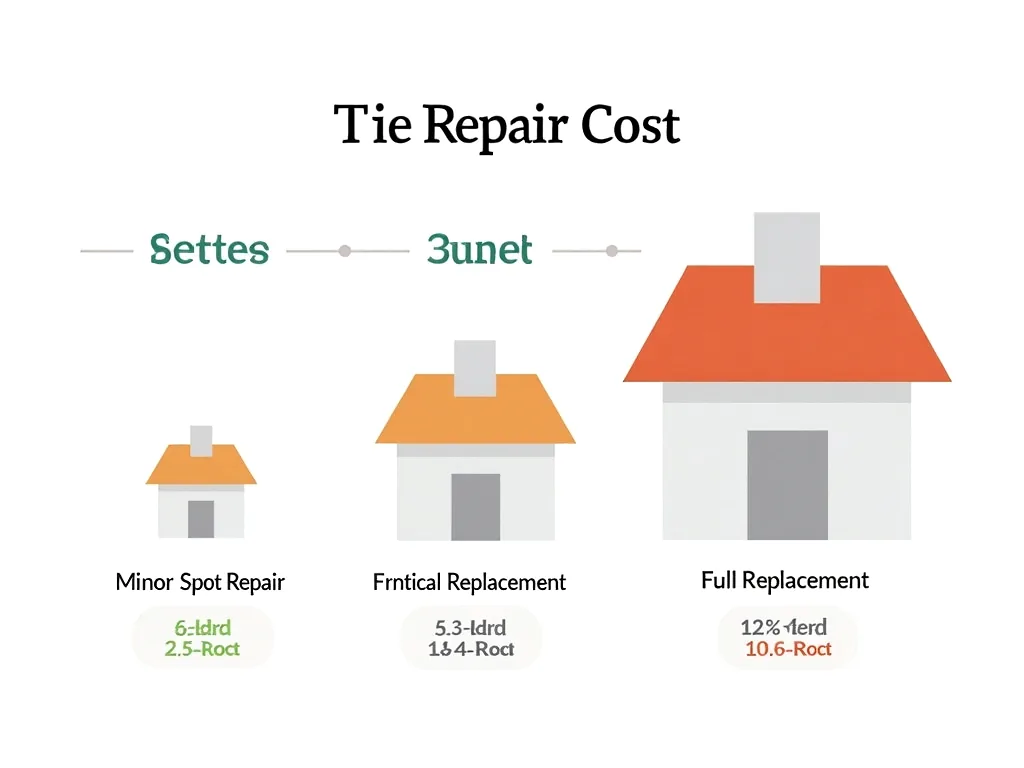
How you fix it depends on how widespread and how bad the damage is.
Minor damage (localized, a few shingles): $300 to $1,000. Spot repair involves replacing individual damaged shingles. This is appropriate when damage is limited to a small area and the rest of the roof is in good condition. The challenge is color matching — new shingles will not perfectly match weathered ones.
Moderate damage (one slope or section): $2,000 to $6,000. Partial replacement addresses damage concentrated on one face of the roof. This is common when hail came from a single direction and impacted the windward slope more heavily than the leeward side.
Severe or widespread damage: $8,500 to $25,000+ in the DMV. Full replacement is warranted when hail damaged 25 percent or more of the roof surface. At this level, insurance typically covers the full replacement cost minus your deductible.
Storm damage claims create an upgrade opportunity. If your 20-year-old three-tab shingles sustained hail damage and the insurance claim covers full replacement, the payout is based on like-kind replacement (the cost of new three-tab shingles). Homeowners often pay the modest upgrade difference out of pocket to move to architectural or Class 4 impact-resistant shingles — a smart investment that reduces future hail vulnerability.
The actual cost depends on roof size, material choice, pitch, and how many layers need tear-off — variables that are hard to estimate without specific roof measurements. Having your own cost estimate before the insurance adjuster arrives puts you in a stronger negotiating position and ensures the adjuster’s Xactimate numbers align with current DMV pricing. Estimate Your Hail Damage Repair Cost using our calculator, which accounts for roof size, material preferences, and DMV-specific labor and permit costs.
Preventing Future Hail Damage
You cannot stop hail from falling, but the right roofing materials make a big difference in how much damage it does.
Class 4 impact-resistant shingles are tested to the UL 2218 standard, which simulates the impact of two-inch hailstones. These shingles use a modified polymer blend or rubberized asphalt that absorbs impact energy without fracturing. They cost 20 to 40 percent more than standard architectural shingles but offer tangible benefits beyond hail resistance.
Insurance premium discounts are one of the strongest financial arguments for Class 4 shingles. Many carriers in the DMV offer 10 to 25 percent premium reductions for homes with UL 2218-rated roofing. Over a 30-year roof life, the cumulative premium savings can offset or exceed the higher material cost.
Metal roofing offers the best hail resistance of any residential material. Standing seam metal roofs dent under severe hail but almost never sustain functional damage. The upfront cost is two to three times higher than asphalt shingles, but the 40- to 60-year lifespan and near-zero hail vulnerability make it an increasingly popular choice for DMV homeowners tired of filing claims after every hail season.
Regular maintenance extends hail resilience. A well-maintained roof with intact adhesive strips, properly sealed flashing, and adequate ventilation withstands hail better than a neglected one. Annual inspections catch early degradation before a hailstorm turns minor wear into major damage.
Hail Damage FAQs
What qualifies as hail damage on a roof? Hail damage on a roof includes granule displacement on asphalt shingles, soft spots or bruising where the fiberglass mat has fractured, cracked or split shingles, dents on metal components (vents, flashing, gutters), and punctures in flat roofing membranes. The damage must show a random impact pattern and be consistent with a confirmed hail event.
How do I know if my roof has hail damage? Check for dark spots on shingles (displaced granules), dents on gutters and metal vents, granule buildup in gutters, and soft or spongy spots when pressing on shingles. From inside, look for ceiling stains or attic moisture that appeared after a hailstorm. Collateral evidence — dented car hoods, damaged window screens, pockmarked siding — confirms hail was severe enough to damage roofing.
What size hail will damage a roof? Quarter-size hail (1 inch) can damage aging asphalt shingle roofs. Golf-ball-size hail (1.75 inches) damages most residential roofing materials. Baseball-size hail (2.75 inches) causes severe damage to all roof types. The threshold depends on the roof’s age, material, and condition.
Does insurance cover hail damage to a roof? Most standard homeowners policies cover hail damage under dwelling coverage. However, some policies exclude cosmetic-only hail damage, and many carry separate wind/hail deductibles (typically 1 to 2 percent of dwelling value). Check your policy’s exclusions and deductible structure before filing a claim.
Next Steps: Get Your Roof Assessed
Now that you know what hail damage looks like on different materials, the next question is whether your own roof has been hit and how bad it is.
Identifying the damage is step one. Whether it is minor, moderate, or severe tells you whether you need to monitor, repair, or do a full replacement. The difference between a $300 spot repair and a $20,000 full replacement comes down to damage density and severity, weighed against your roof’s age and material type. Take the 2-Minute Hail Damage Assessment to get a damage severity score tailored to your situation.
Free professional inspections are available throughout the DMV for homeowners with suspected hail damage. A licensed inspector on your roof will find damage that no ground-level assessment or online guide can detect. Do not wait on this. Every week you delay lets hail damage get worse through temperature swings and rain, and it gives the insurance company room to question when the damage actually happened.
The DMV’s hail season runs from March through August, but hail frequency is not uniform across the region. Certain counties like Prince George’s and Charles sit in a defined hail corridor with two to three times the event frequency of surrounding areas. Homeowners in these zones face compounding damage from repeated hail events, where each storm adds to the degradation from the last. See the DMV Hail Corridor Map to check your county’s hail risk level and historical storm frequency.