
Storm Damage Roof Repair in Washington DC
DC gets severe thunderstorms with hail and high winds from spring through summer, and the city’s density concentrates the damage. When a hailstorm rolls through, thousands of homes get hit at once: rowhouses sharing party walls, historic homes with irreplaceable slate roofs, and newer developments with standard asphalt shingles.
Our DCRA-licensed contractors specialize in storm damage repair across all DC neighborhoods and all roof types — flat membrane systems on rowhouses, slate restoration in historic districts, and asphalt shingle repair on newer homes. Free storm damage inspections are available same-week throughout the District, and every inspection includes full insurance claim management at no additional cost.
Common Storm Damage in DC
DC’s housing stock creates storm damage patterns that are different from the surrounding suburbs.
Flat roof damage on rowhouses is the most common storm damage type in DC. The District’s rowhouses — the dominant residential building type from Capitol Hill to Petworth — almost universally have flat or low-slope membrane roofs (TPO, EPDM, or modified bitumen). These membranes are vulnerable to hail punctures, seam separation under thermal stress, and ponding water after storm-driven debris clogs internal drains. Unlike pitched asphalt shingle roofs, flat roof damage is often invisible from street level. Water pools on the membrane, seeps through punctures, and shows up weeks later as ceiling stains on the top floor.
Slate roof damage in historic neighborhoods requires specialized expertise. Georgetown, Capitol Hill, Dupont Circle, Cleveland Park, and Kalorama contain thousands of homes with original or replacement slate roofs dating from the 19th and early 20th centuries. Hail cracks and chips individual slate tiles, creating water entry points that accelerate deterioration of the surrounding tiles and the underlayment beneath. Slate repair requires sourcing matching material (often from the original quarry or a compatible substitute) and a roofer trained in traditional slate installation techniques.
Wind uplift on older roofs is a significant damage type in DC. Many older homes have inadequate edge metal and deteriorated adhesive strips along the eaves, making them vulnerable to shingle lifting and membrane peeling during high-wind events. DC’s urban wind tunnels — created by narrow streets between tall row structures — can amplify wind speeds at roof level.
Water intrusion from storm-driven rain does the most damage over time in DC. Aging rowhouse roof membranes develop micro-tears and seam failures you cannot see until a heavy storm pushes water through. From there, the damage works its way down through insulation, ceiling joists, plaster or drywall, and interior finishes.
Tree fall damage from DC’s mature urban canopy is the last major category. The District’s street trees — many 60 to 100 years old — shed large limbs during storms, and the proximity of these trees to residential structures means branches frequently land on roofs.
If you suspect damage but cannot easily check your roof, especially a flat roof you cannot see from the street, start with a ground-level self-assessment that checks for visible indicators and interior signs like ceiling stains. Assess Your Storm Damage in two minutes without climbing on the roof.
DC Roofing Regulations and Permits
DCRA licensing. All roofing contractors working in Washington DC must hold a valid license from the Department of Consumer and Regulatory Affairs (DCRA). Verify any contractor’s license status at dcra.dc.gov before signing any agreement. Unlicensed roofing work in DC can result in stop-work orders, fines, and complications with your insurance claim.
Building permits. DC requires a building permit for all roof replacements, applied for through DCRA. Permit timelines vary but typically take one to three weeks for standard residential projects. Your contractor should handle the permit process.
Cool roof requirement. Certain roof replacements in DC must meet Solar Reflectance Index (SRI) standards under the District’s energy code. This applies primarily to flat and low-slope roofs — the most common type on DC rowhouses. Cool roof compliant materials reflect more solar energy and reduce building cooling costs, but they limit material choices and may increase costs compared to standard membranes.
Historic preservation. DC has more than 50 designated historic districts, and any exterior work — including roofing — in these districts requires review by the State Historic Preservation Office (SHPO). In neighborhoods like Georgetown, Capitol Hill, and Logan Circle, the SHPO may require that replacement materials match the original in material type, color, and profile. Slate roofs in historic districts must typically be replaced with slate, not converted to asphalt shingles, which increases costs substantially.
Emergency repairs. DC permits can be obtained after emergency work with proper documentation. If your roof has an active leak or structural compromise, you do not need to wait for a permit to install an emergency tarp. Document the emergency condition, perform the stabilization, and apply for the permit retroactively.
Roof Replacement Costs in Washington DC (2026)
DC carries the highest labor costs in the DMV — 20 to 30 percent above the national average — and several regulatory requirements that add to the total project cost.
Flat roof membrane replacement (rowhouse): $8,000 to $15,000 for a typical two- to three-story rowhouse. TPO and EPDM are the standard materials, with cool-roof-compliant options at the higher end of the range.
Asphalt shingle replacement: $10,000 to $20,000 for homes in Chevy Chase DC, Tenleytown, Brookland, and other neighborhoods with pitched roofs. DC’s labor premium pushes shingle replacement costs above Maryland and Virginia levels.
Slate repair and restoration: $15,000 to $35,000 or more, depending on the roof size, the availability of matching slate, and whether the project requires SHPO review. Historic district requirements can extend both the timeline and the cost.
Permit fees: $150 to $500 depending on project scope and whether historic review is required.
Insurance covers storm damage minus your deductible. DC’s unique roof types and regulatory requirements mean that getting an accurate, DC-specific estimate is essential — national cost averages are unreliable for District projects.
DC’s labor premium and rules like cool roof standards and historic preservation requirements make generic national cost estimates useless here. A calculator calibrated to DMV pricing gives DC homeowners a more realistic starting point. Calculate Your Roof Replacement Cost with our DMV-calibrated tool.
DC Neighborhoods We Serve
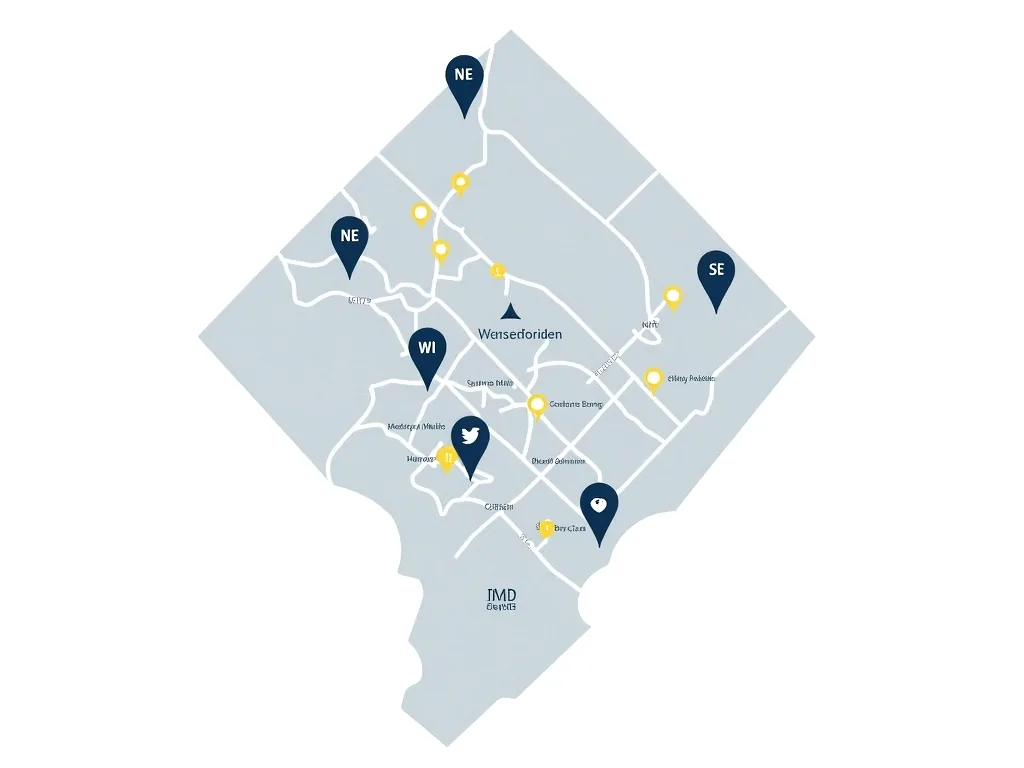
Northwest: Georgetown, Dupont Circle, Chevy Chase DC, Tenleytown, Cleveland Park, Woodley Park, Adams Morgan, Columbia Heights, Petworth, Brightwood, Friendship Heights.
Northeast: Brookland, Fort Totten, Woodridge, Ivy City, Edgewood, Michigan Park, Trinidad.
Southeast: Capitol Hill, Anacostia, Navy Yard, Fairlawn, Congress Heights, Hillcrest.
Southwest: The Wharf, Waterfront, Buzzard Point.
All wards of DC are covered for both emergency and scheduled inspections. Same-day emergency response is available for active leaks and structural damage.
DC sees 5 to 8 significant hail events per year, partly because the urban heat island effect feeds stronger thunderstorms over the city. The DMV hail corridor data shows how DC’s hail risk stacks up against surrounding Maryland and Virginia jurisdictions, which is worth checking if you are deciding whether impact-resistant roofing materials make sense for your home. See the DMV Hail Corridor Map to check DC’s hail risk relative to the region.
Filing a Storm Damage Claim in DC
DC Department of Insurance, Securities and Banking (DISB) oversees insurance claims in the District. DISB provides consumer protections that differ from Maryland and Virginia — including specific dispute resolution channels for denied claims. But these protections only help homeowners who file correctly in the first place, with proper documentation and within the policy’s notice window. How to File a Roof Insurance Claim in DC — step-by-step guidance with DC-specific regulatory details.
DC consumer protections include the right to file a complaint with DISB if your claim is unfairly denied or the settlement amount is unreasonably low. DISB investigates and can compel insurers to review their decisions.
Document damage before and after emergency repairs. If you need emergency tarping or stabilization, photograph the damage extensively before any work begins. This preserves the evidence for your insurance claim.
DC’s housing stock, from shared-wall rowhouses to historic slate roofs to flat membrane systems, needs contractors with specific experience, not just a general roofing license. Check DCRA credentials and ask about experience with your roof type. A contractor who has only worked on suburban asphalt shingle homes can make expensive mistakes on a DC flat roof or slate job.
Do I need a permit to replace my roof in DC? Yes. DC requires building permits for all roof replacements, applied for through DCRA. In historic districts, you also need SHPO approval before work begins.
How much does a new roof cost in Washington DC? Flat membrane replacement for a standard rowhouse costs $8,000 to $15,000. Asphalt shingle replacement on pitched-roof homes costs $10,000 to $20,000. Slate restoration starts at $15,000 and can exceed $35,000. DC’s 20 to 30 percent labor premium and regulatory requirements account for the higher costs compared to Maryland and Virginia.
What are DC’s cool roof requirements? Certain roof replacements in DC must meet minimum Solar Reflectance Index (SRI) standards. This primarily affects flat and low-slope roofs. Your contractor should confirm whether the cool roof requirement applies to your project and factor compliant materials into the estimate.
Get Your Free Roof Inspection in DC
Free storm damage inspections are available throughout Washington DC with same-week scheduling. DCRA-licensed, insured contractors who specialize in DC’s unique housing stock — flat membranes, slate, and asphalt shingles.
Every inspection includes a written report, photos, and a line-item estimate. We handle insurance claim paperwork from filing through final payout. No obligation, no cost for the inspection.